
A decade ago, joint ventures held a commanding position in the Chinese auto market, leveraging mature combustion engine technology and strong brand reputations. Volkswagen's TSI+DSG powertrain and Toyota's THS hybrid system were the gold standards of the industry. Domestic brands, on the other hand, were largely confined to the sub-$14,000 (converted from RMB 100,000) low-end segment, with their aspirations to move upmarket repeatedly thwarted.
A decade later, the tides of new energy and intelligence have entirely rewritten the rules of the automotive game. According to data from the China Passenger Car Association in February 2026, the new energy penetration rate for mainstream joint ventures stands at a mere 4.5% (and as low as 3.1% under some statistical methodologies), while domestic brands have surged past a 60% share of the NEV market. Industry giants like Honda, Volkswagen, and Stellantis find themselves mired in a severe earnings winter, whereas domestic players such as BYD, Geely, Xpeng, and Leapmotor are rapidly ascending on the global stage.
Stuck in a Rut and Lost in the Pivot
Caught in the double-whammy of new energy and intelligent transformation, joint ventures have neither managed to extend their dominance from the combustion-engine era nor kept pace with the rapid changes in China. Previously, multinational automakers had loudly proclaimed slogans of "full electrification." General Motors announced a $35 billion electrification budget, and Volkswagen set a target for 80% of its sales to be electric by 2030. However, these plans overestimated the durability of global policy incentives and misjudged the pace of consumer adoption. Moreover, they erroneously equated electrification with simple "gas-to-electric" conversions, lacking any fundamental innovation in vehicle architecture.

When the United States eliminated the $7,500 EV tax credit and the European Union relaxed its 2035 ban on internal combustion engine vehicles, demand for EVs in Western markets plummeted. Global automakers were forced into a hasty strategic retreat: Porsche terminated its in-house battery production plans and booked a €4.7 billion exceptional loss. Honda, in particular, posted its first annual net loss in 69 years due to strategic pivots in electrification, expecting a net loss of ¥690 billion for fiscal year 2026, with total related losses potentially reaching as high as ¥2.5 trillion.
The generational gap in intelligent technology has cost joint ventures their appeal among mainstream consumer demographics. While electrification represents a powertrain revolution, intelligence constitutes the very redefinition of a vehicle's soul—and this is precisely the central battleground of the Chinese auto market. Generation Z has emerged as the dominant car-buying cohort, ranking "intelligent driving capability" and "cabin technology experience" among their top three decision-making factors. Yet joint ventures have been comparatively conservative in deploying advanced intelligent technologies on the ground.
On the hardware front, domestic brands have long since standardized high-performance computing platforms like the NVIDIA Orin chip with 254 TOPS of processing power, with even more advanced NVIDIA Thor chips already being integrated into new models. Conversely, many joint venture models continue to rely on older Mobileye Q4 chips, creating a generational gap in intelligent driving hardware. More critically, the "headquarters decides, local executes" management structure of joint ventures leaves them unable to respond nimbly to China's rapidly evolving market. Domestic NEV brands can launch new or refreshed models within one to two years, with some offering quarterly over-the-air (OTA) updates. In stark contrast, some joint ventures require five to seven years just to complete a single model generation change. While joint ventures are still mapping out their next platform architectures, domestic competitors have already rolled out two complete product upgrade cycles. This disparity in development cadence leaves joint venture offerings perpetually trailing the mainstream market. Simultaneously, the brand premium that joint ventures once relied upon is steadily eroding.
The strategy of slashing prices to boost volume, coupled with the poor return on massive investments, has exacerbated the precarious position of joint ventures. Another wave of collective price cuts has swept through 2026, with discounts on single models reaching as high as $41,000 (converted from RMB 300,000). The BMW i3, which carries an official MSRP of $48,000 (converted from RMB 350,000), is now selling for around $27,500 (converted from RMB 200,000) at the dealership level. New energy models from Toyota and Honda have similarly joined the fray of deep discounting.
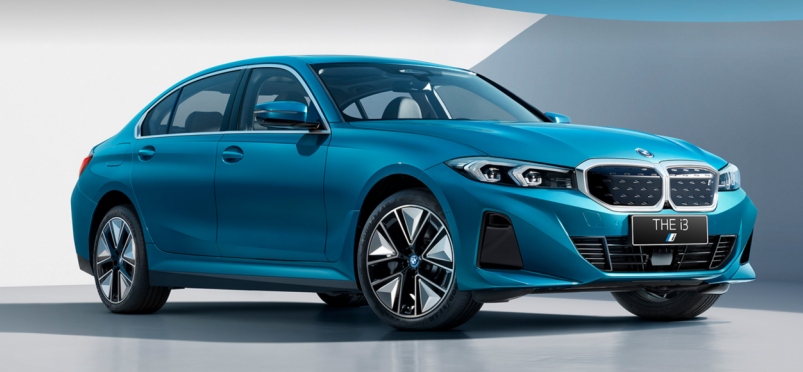
However, "trading price for volume" is far from a sustainable solution. For instance, in November 2025, the average discount on new energy vehicle models reached 18.7%, yet overall passenger vehicle sales still declined 8.1% year-over-year. The BMW i3, despite price cuts, saw monthly sales languish at just one to two thousand units. The FAW Toyota bZ3 recorded full-year 2025 sales of 22,600 units, a steep 55.6% drop compared to the previous year.
It is worth noting that a lack of investment is not the issue. General Motors has committed $70 billion to electrification efforts in China, and Volkswagen invested €2.4 billion in a joint venture with Horizon Robotics to bolster intelligent driving R&D. Yet, in 2025, Volkswagen's operating profit fell by 53%, Porsche's sales profit nosedived by 92.7%, and Honda's losses related to electrification equaled the sum of its profits from the previous three years.
Meanwhile, the market share of joint venture brands continues to contract. In 2025, mainstream joint venture passenger vehicle sales totaled 5.77 million units, with their market share plummeting from 51% in 2020 to just 24%—a halving in a mere five years.
Joint Ventures Scramble to Shake Things Up and Find a New Lane
Despite being in dire straits, joint venture brands are by no means defenseless. Their decades of accumulated technical heritage, global channel resources, and a strong will to survive have left room for a turnaround. Since 2025, joint ventures have embarked on a multi-pronged path of self-rescue, ranging from empowering local decision-making and deepening cooperation with Chinese companies to positioning themselves in the hybrid vehicle segment and exploring reverse exports. China's unique advantages in the new energy market have also presented fresh opportunities for development. This battle for survival is not solely about defending their Chinese market share but also about securing a new position within the restructuring global automotive landscape.
Deep exploration of localized autonomy has become a critical step for joint ventures to adapt to the Chinese market. Historically, product planning was dominated by foreign headquarters, leaving Chinese partners with limited input and resulting in products that missed the mark with local consumer demand. Today, a growing number of joint ventures are delegating R&D decision-making authority to their local Chinese operations. Toyota, for instance, has instituted a "Regional Chief Engineer (RCE) System" for China, entrusting the core development authority of vehicles to the local Chinese team. The shift from "In China, for China" to "Decided by China, for China" has become an irreversible trend. Shorter decision-making chains and stronger localized R&D are gradually alleviating the chronic "acclimatization issues" faced by joint ventures, which is essential for maintaining a lasting foothold in the Chinese market.
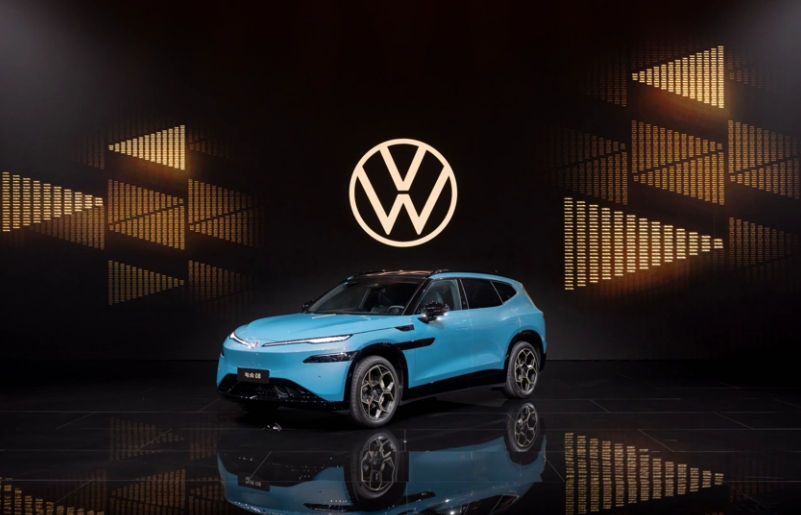
This "reverse integration" with Chinese enterprises has allowed joint ventures to hitch a ride on China's express train of intelligence and supply chain capabilities. Examples include BMW's partnership with Huawei on in-car systems, Ford's collaboration with CATL in the battery sector, and the landmark joint development between Volkswagen and Xpeng—their first co-developed model, the ID. UNYX 08, is already available for pre-sale, with the ID. UNYX 07, featuring the jointly developed CEA electronic and electrical architecture, set to launch shortly.
It is foreseeable that such collaboration will persist and deepen. China has emerged as the global epicenter of innovation in intelligent vehicle technology, while in the electrified supply chain domain, Chinese companies have established a formidable moat of cost efficiency and technical superiority. By forging deep partnerships with Chinese tech firms and domestic automakers, joint ventures are rapidly closing the gap in intelligence and battery technology. Meanwhile, Chinese enterprises gain global reach by leveraging the established international channels of these joint ventures. This mutually beneficial model is rapidly becoming the essential roadmap for the transformation of joint venture brands.
The global strategy of reverse exporting has also uncovered new market growth avenues for joint ventures. In 2025, China accounted for 68.4% of the global new energy passenger vehicle market share, making the nation's manufacturing strengths a critical pillar for these partnerships. By utilizing China's new energy supply chain and production bases to realize the "In China, for the World" model, joint ventures can not only absorb domestic production capacity but also tap into overseas markets through China's technological leadership. This paradigm shift reflects the Chinese auto market's evolution from "product import" to "product export" and from "technology acquisition" to "technology export." Joint ventures are now both participants in and beneficiaries of the globalization of China's automotive industry.
Moreover, joint ventures still possess undeniable strengths in quality control, safety, and global service networks. While they may lag temporarily in intelligence and electrification, the decades of accumulated production expertise, rigorous quality assurance systems, and extensive global sales and service networks are advantages that domestic brands cannot easily replicate in the short term. When joint ventures successfully integrate these legacy strengths with China's cutting-edge intelligent and electric technologies, they can cultivate a renewed competitive edge for their products.
For joint venture brands, breaking through the current stalemate requires genuine, deep "localization" integration. This goes beyond merely adapting products to the local market; it demands comprehensive localization of R&D, decision-making, and corporate culture. Chinese teams must be granted real decision-making authority so that products truly align with the needs of Chinese consumers. At the same time, joint ventures must significantly increase investment in fundamental electric vehicle architectures and core intelligent technologies. By leveraging collaborations with Chinese enterprises, they can rapidly shore up their weaknesses, combining their own traditional strengths with China's advanced new energy technology to forge differentiated product competitiveness. Furthermore, joint ventures need to stay attuned to shifts in the global automotive landscape. By capitalizing on China's manufacturing advantages in the new energy sector, they can execute an "In China, for the World" strategy, identifying new growth opportunities in overseas markets.




 26th Floor, Moutai Tower, Building 3, Courtyard 29, North Third Ring Middle Road, Xicheng District, Beijing, China
 010-65993545
 quanqixiang@carresearch.cn
Follow us
Scan the QR code to follow our official WeChat account车市睿见 Interact on MicroBlog@车市睿见
 京公网安备:11010202007638号|京ICP备17032593号-2|Report illegal and bad information:010-65993545 jubao@carresearch.com
Legal support:Beijing Yingke Law Firm|All rights reserved, DO NOT reproduce without permission

 News
News