
In 2025, both production and sales of new energy vehicles in China surpassed 16 million units, with market penetration breaching the 50% mark and securing the global top spot for the 11th straight year. At the 2026 High-Level Forum on Intelligent Electric Vehicle Development, Professor Ouyang Minggao of Tsinghua University delivered a sobering verdict: the phase of high-speed growth is over. Competition is shifting from capturing new demand to battling for existing share, and the "follower strategy" is losing its effectiveness. As the logic of growth changes, the core three-electric technologies—with the battery at the center—have become the ultimate competitive advantage.

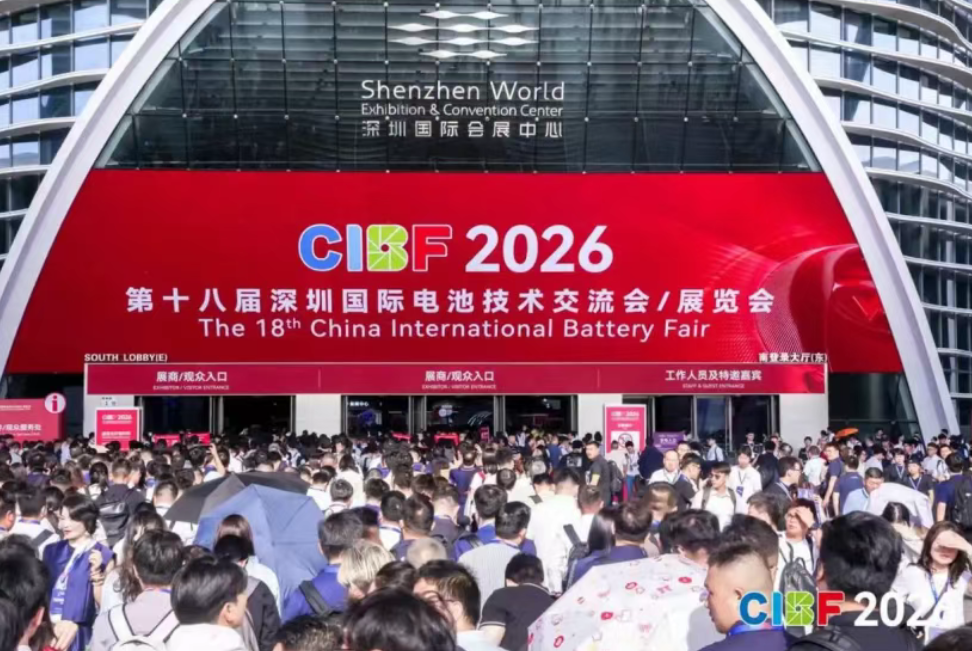
The 18th China International Battery Fair (CIBF 2026), which just wrapped up in Shenzhen, highlighted a pivotal shift from "laboratory specs" to "large-scale mass production." At the show, once-hyped concepts like semi-solid-state batteries, sodium-ion batteries, and 800V ultra-fast charging now come with concrete mass-production timelines and clear roadmaps to commercialization.
From the "Absolute Dominance" of LFP to a Diverging Roadmap as New Systems Break Through
April data from the China Automotive Power Battery Industry Innovation Alliance showed LFP installations hitting 50.8 GWh, an 81.5% share that set a new record, leaving NMC with just 18.5%. Cumulative figures for January through April reinforce the trend: LFP installations reached 149.8 GWh (80% share), compared with 37.4 GWh (20%) for ternary.
LFP's dominant share is built on three core strengths: safety from a thermal runaway threshold above 500°C, exceptional durability with 3,000 to 10,000 cycles, and a roughly 30% material cost advantage over NMC. This trifecta has driven widespread adoption across energy storage, commercial vehicles, and affordable passenger cars. In the first quarter of 2026, China's energy storage battery shipments hit 209 GWh, a 115% year-over-year jump, with LFP making up more than 97%. At the 2026 "Flash Charge China" event, BYD Chairman Wang Chuanfu said plainly, "LFP is BYD's ballast."
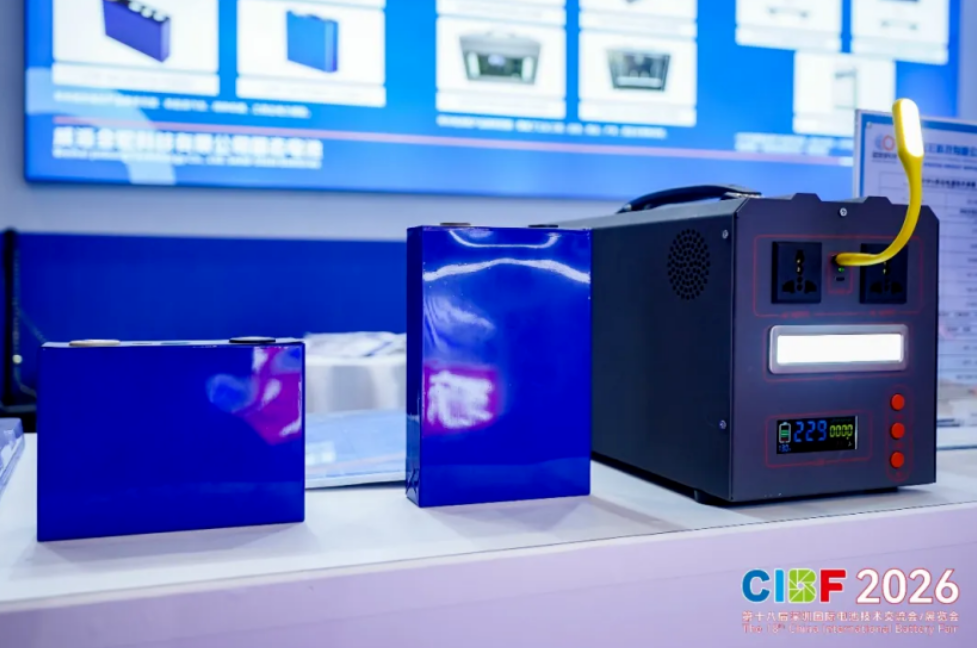
On the LFP technology front, CATL, BYD, and Gotion High-Tech have all moved to full mass production of their fifth-generation LFP cells. Analysts expect this technology pathway to capture more than 30% of the market in 2026, making it the mainstream platform for power batteries. At CIBF 2026, top players such as CATL, BYD, GAC, and EVE Energy showcased mature, production-ready solutions that can be directly integrated into vehicles, marking a new "delivery phase" for battery, electric drive, and electronic control technologies.
BYD's second-generation Blade Battery uses an LMFP composite cathode combined with a silicon-carbon anode, pushing energy density to 190–210 Wh/kg. Structural innovations such as cell-to-pack (CTP) technology and the Qilin battery are gradually compensating for LFP's energy density shortcoming, enabling system-level energy density to consistently exceed 160 Wh/kg.
But LFP isn't a one-size-fits-all solution. A CATL CTO publicly noted that using LFP in vehicles priced above 250,000 yuan amounts to a "disguised downgrade." Current NMC ternary cells reach 200–250 Wh/kg, with premium cells surpassing 280 Wh/kg, whereas LFP typically delivers only 140–180 Wh/kg. To match the same driving range, you simply have to pack in more cells. As lithium prices continue to climb, cost pressures are pushing battery makers to look toward more forward-looking technologies. Solid-state batteries are now the next big wager.
Crossing the Tipping Point: The Industrialization of Solid-State and Sodium-Ion Batteries Accelerates
The unmistakable message from CIBF 2026 is that solid-state batteries have moved beyond the lab—they now involve integrated advancements across materials, equipment, cells, and applications. SVOLT Chairman Yang Hongxin declared 2026 the "first year" for solid-liquid hybrid batteries, with multiple vehicle models equipped with 100 kWh hybrid packs slated for mass production in September. CATL's Qilin condensed-state battery is expected to enter mass production in the second half of 2026. Gotion High-Tech presented its all-solid-state "Jinshi" (Golden Stone) battery, boasting 350 Wh/kg, with plans to begin small-batch production by the end of 2026.
Automakers are also moving fast to secure their positions. Changan Automobile announced it will validate solid-state battery installation in vehicles in 2026 and gradually move to mass production of all-solid-state batteries in 2027, targeting an energy density of 400 Wh/kg. SAIC Motor has applied its next-generation semi-solid-state battery in the all-new MG4, and its first all-solid-state "Guangqi Battery" is set to arrive in 2027. GAC Group plans to equip its premium Hyper brand models with all-solid-state batteries in 2026.
BYD CTO Sun Huajun disclosed that the company will begin pilot-scale deployment of all-solid-state batteries in vehicles around 2027, with large-scale adoption expected around 2030. According to the Gaogong Industry Institute, in the first four months of 2026 alone, planned capacity expansions in the solid-state battery sector surpassed 100 GWh, with investments exceeding 30 billion yuan and total planned capacity nearing 600 GWh. The timeline to mass production is coming into sharper focus, and the race is already intensifying.
But before solid-state batteries can be adopted in vehicles at scale, several tough hurdles remain. The technology roadmap has yet to converge—sulfide, oxide, and polymer routes each have their proponents, and the absence of unified standards pushes up supply chain coordination costs. The drop in ionic conductivity and the solid-solid interface contact problems caused by solid electrolytes continue to be key bottlenecks that limit cell consistency and mass-production yields. Huatai Securities points out in its analysis that while the industrialization path from 1 to N is clear, two immediate roadblocks—cost pressure and fragmented technology routes—are likely to delay genuine mass-market volume until 2027 to 2028.
Unlike the triumphant march of solid-state batteries, sodium-ion batteries present a more nuanced story. On one hand, the "no sodium, no party" buzz rivals that of solid-state—CATL, BYD and other majors set up dedicated booths, and material suppliers showcased their offerings. CATL's "NaXin" battery achieves all-temperature adaptability from -40°C to 70°C and still delivers 90% of its usable capacity in extreme cold. At CATL's Super Tech Day in April, Robin Zeng announced the company had overcome four critical mass-production hurdles: extreme moisture control, gas generation from hard carbon, aluminum foil adhesion bottlenecks, and large-scale manufacturing of self-forming anodes. The NaXin battery is scheduled to enter mass production by the end of 2026. At the same time, CATL inked a three-year, 60 GWh sodium-ion battery order with Hyperstrong—a striking figure compared with global sodium battery shipments of only about 9 GWh in 2025, underscoring the heavyweight endorsement from an industry leader.
But on the flip side, "more expensive than lithium" remains the harsh reality for most sodium-ion battery players. Many have built capacity yet have little to no output, passively waiting for the next spike in lithium prices to create a tailwind. Huatai Securities notes that with lithium hovering around 200,000 yuan per ton, the strategic value of sodium batteries is being amplified. This year is set to be the first year of mass production for sodium-ion cells, with costs expected to gradually decline. As for applications, the industry consensus views energy storage as the biggest high-certainty market for sodium batteries, while two-wheelers and start-stop batteries offer the fastest path to replacing lead-acid. Robin Zeng predicted, "I expect sodium batteries to eventually replace 30% to 40% of the existing battery market."
Battery technology iteration never happens in a vacuum—it inevitably pulls electric drive and electronic control systems along with it. Beyond the exhibition floor at CIBF 2026, the systemic competition in electrification technologies was just as clear. Average battery capacity per vehicle continues to climb. Data from the China Automotive Power Battery Industry Innovation Alliance shows that in the first four months of this year, the average installed battery capacity of new energy vehicles in China reached 67.8 kWh, up 33.8% year over year. Higher capacity demands higher-voltage platforms, and 800V architectures are now trickling down from premium models to the mainstream market. The mass adoption of silicon carbide power devices has become a key variable for upgrading electronic control systems.
The "Seven Alls" technology framework outlined by Ouyang Minggao—full-process safety, all-climate ultra-fast charging, fully autonomous driving, full steer-by-wire chassis, all-solid-state batteries, all-operating-condition high efficiency, and fully functional electric vehicles—signals that the industry has moved beyond isolated breakthroughs and entered an era of systemic technological competition.
Based on the overall showing at CIBF 2026 and recent shifts in capital market sentiment, the industry’s trajectory is coming into sharper focus. The lithium battery sector has decisively left behind the era of crude, unchecked capacity expansion. Investors now prioritize the ability to customize solutions for specific use cases, the quality of order backlogs, the defensibility of niche segments, and the capacity to plan across market cycles. Competition has shifted from a homogenized manufacturing slugfest to a comprehensive value contest—one centered on deep demand insight, solution matching, and ecosystem synergy. Diverging demand across different applications directly shapes product strategies and drives a widening valuation gap in the capital markets.




 26th Floor, Moutai Tower, Building 3, Courtyard 29, North Third Ring Middle Road, Xicheng District, Beijing, China
 010-65993545
 quanqixiang@carresearch.cn
Follow us
Scan the QR code to follow our official WeChat account车市睿见 Interact on MicroBlog@车市睿见
 京公网安备:11010202007638号|京ICP备17032593号-2|Report illegal and bad information:010-65993545 jubao@carresearch.com
Legal support:Beijing Yingke Law Firm|All rights reserved, DO NOT reproduce without permission

 News
News