
Most recently, Nissan and Chery International UK signed a non-binding MOU to study the feasibility of contract manufacturing Chery passenger vehicles at the Sunderland plant, with production potentially starting as early as fiscal year 2027.
In the span of just over a month leading up to this, Dongfeng signed a memorandum with Stellantis, Leapmotor gained a local production pathway through Stellantis’s Spanish plant, and Geely entered talks with Ford to share Spanish factory capacity. Chinese automakers have recently been forging a dense stream of partnerships with foreign counterparts — through contract manufacturing, equity stakes, and capacity sharing. Having once played the role of “apprentice” in joint ventures, Chinese automakers are now reverse-penetrating the heart of the global auto industry as technology exporters, capacity integrators, and brand operators.
Reverse deals keep rolling in — reshaping production at full throttle
The contract manufacturing agreement between Nissan and Chery is another telling case in the recent wave of reverse collaborations. According to the MOU, the Sunderland plant’s property, production equipment, and current employees will all remain under Nissan’s ownership, and Nissan will have full operational control. Chery will only use Line 1 for vehicle production, with no equity stake in the plant. Nissan will consolidate production of its own models onto Line 2, freeing up Line 1 to exclusively produce right-hand-drive vehicles for Chery, destined for the UK and other Commonwealth markets.
The Sunderland plant is the largest car factory in the UK, with a peak annual capacity of 600,000 units. It was once Nissan’s core production hub for the European market, building best-selling models like the Qashqai, Juke, and Leaf. However, hit by the global automotive transformation and weak European consumer demand, the plant has been saddled with overcapacity. Its total output in 2025 was 273,000 vehicles, meaning its capacity utilization rate was below 50%. To cut costs and stem ongoing losses in Europe, Nissan finalized a capacity optimization plan in May 2026, opening its Line 1 to contract manufacturing partnerships with global automakers. Chery ultimately emerged as the intended partner.
For Chery, this collaboration is a major step in deepening its foothold in the UK market. Chery has already established a presence in the UK with three distinct series — Omoda, Jaecoo, and the Chery main brand. In April 2026, its monthly sales surpassed 10,000 units, capturing a 6.7% market share and ranking second in the UK, behind only Volkswagen. By localizing production at the Sunderland plant, Chery will be able to effectively circumvent the tariffs the UK has imposed on Chinese EVs as well as the EU’s countervailing duties.
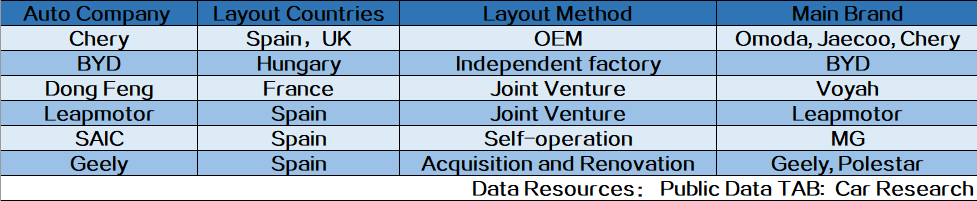
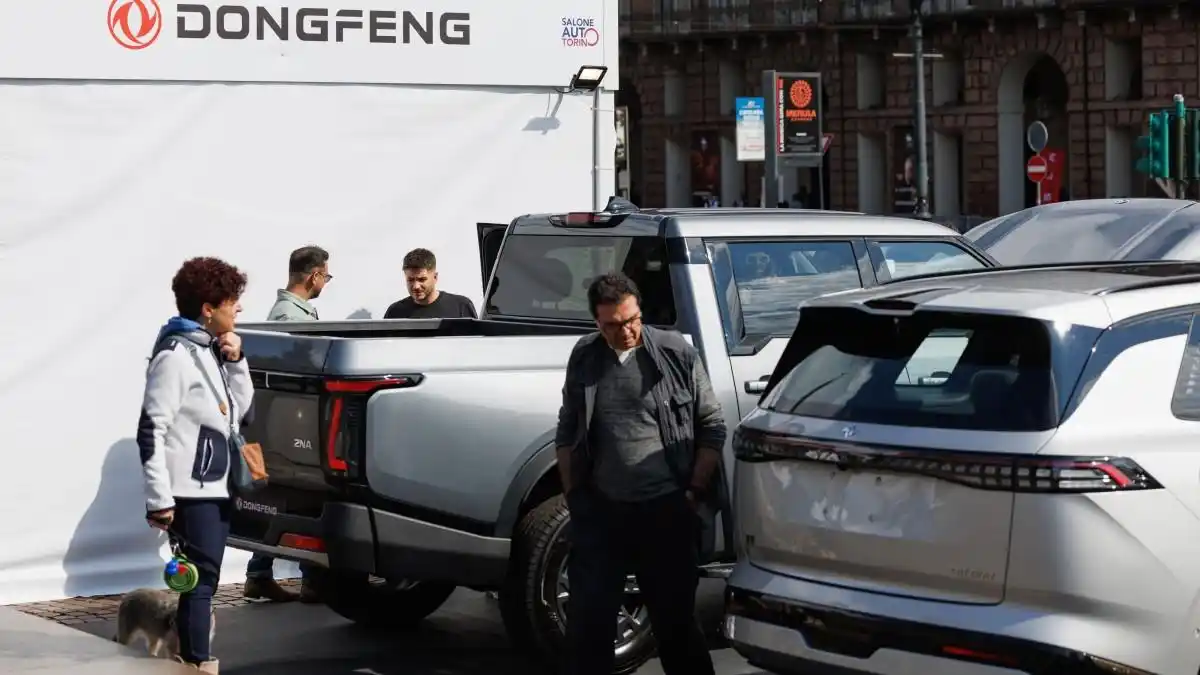
The Nissan-Chery deal is far from an isolated case. On May 20, Dongfeng Motor and Stellantis signed a non-binding memorandum of understanding, expressing their intention to set up a joint venture in Europe. Stellantis would hold a 51% stake and Dongfeng 49%, with Stellantis leading operations. Initially, the JV would be responsible for the sales and distribution of Dongfeng’s premium Voyah new energy vehicles in agreed European markets. The two parties are also exploring the possibility of localized production of Dongfeng’s NEVs at Stellantis’s plant in Rennes, France.
Earlier, on May 8, Leapmotor and Stellantis announced a deepening of their strategic partnership. The two sides are evaluating adding new production lines at the Figueruelas plant in Zaragoza, Spain, to build the Leapmotor B10 and Opel’s all-new C-segment battery-electric SUV. The B10 is expected to start production at the plant in the fourth quarter of 2026, using a CKD model with core electric-drive components supplied from China. The companies are also assessing the possibility of revitalizing capacity at the Villaverde plant in Madrid, with plans to start producing a new Leapmotor model there in the first half of 2028. Ownership of the plant is also under discussion and may be transferred to a joint venture established by the two parties.
In addition to the officially announced deals, Geely and Ford are in talks to share capacity at a Spanish plant. There are also reports that Huawei’s Harmony Intelligent Mobility, JAC Motors, Stellantis, and its Maserati brand are discussing jointly developing Maserati-branded new energy vehicles. The wave of reverse collaboration between Chinese automakers and global giants is entering a phase of intensive deal-making.
Mutual needs driving the tie-up: "Come in" meets an "open door."
When it comes to cooperation models, the reverse collaborations by Chinese automakers now show considerable diversity. Beyond the pure contract manufacturing arrangement between Nissan and Chery, there are models such as Leapmotor and Stellantis’s technology output plus capacity sharing, Dongfeng and Stellantis’s joint venture combined with localized production, the reverse brand licensing between Chery and Jaguar Land Rover, and Xpeng’s technology platform supply to Volkswagen.
A common thread runs through these different cooperation models: Chinese automakers now occupy a more proactive position. They are no longer merely technology importers and market providers, but have become technology exporters and brand operators. Global giants, in turn, are increasingly playing the role of capacity providers and channel partners.

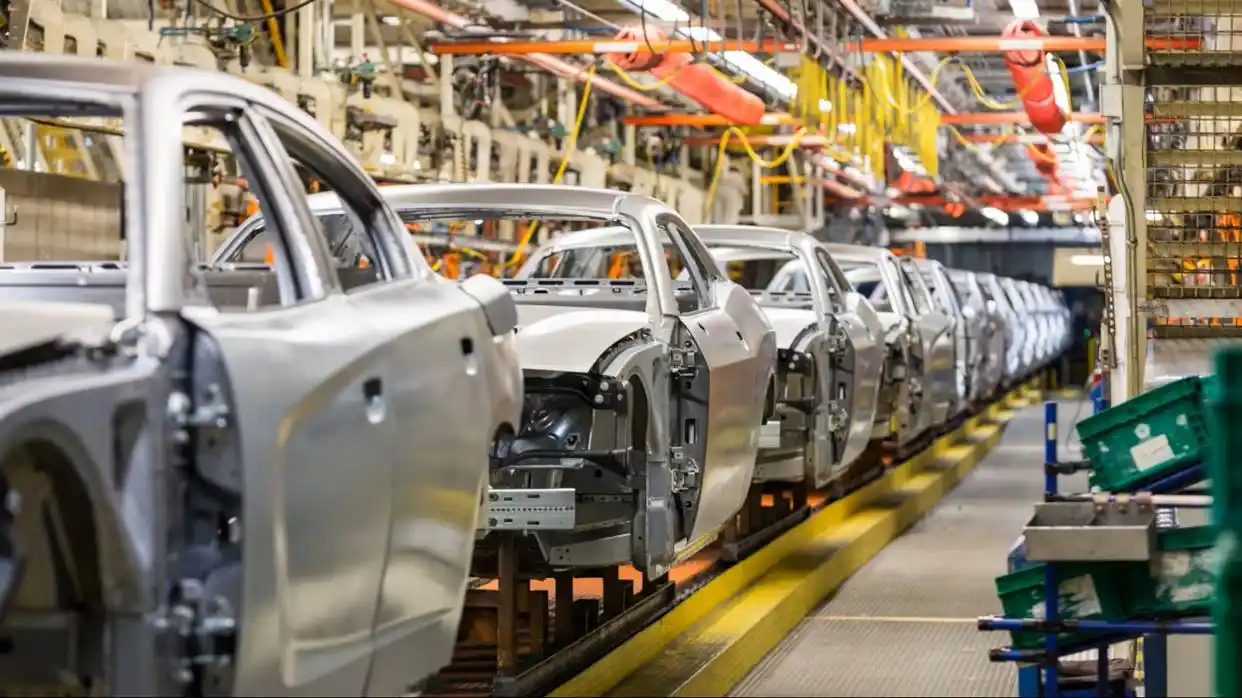
A report by AlixPartners shows that the European auto industry is undergoing an “avalanche” of output, with annual production plunging from 16 million vehicles in 2018 to just 11.4 million in 2024 — a loss of nearly 5 million units in six years. The average capacity utilization rate at European auto plants now stands at only 55%, well below the healthy industry range of 70% to 90%. Stellantis is in the most severe situation: in 2025, the average utilization rate of its European plants was just 46%, leaving idle capacity of about 3.5 million vehicles and annual losses from idle operations exceeding several billion euros. Volkswagen Group’s European capacity utilization also dropped below 60% in 2025, with its Osnabrück plant running at just 30%. Weak demand, the high cost of electrification, and all-around competition from Chinese automakers are shrinking the pie, turning factories into hot potatoes.
To make matters more complicated, powerful unions in Europe make outright plant closures prohibitively expensive. Contract manufacturing for Chinese automakers has therefore become another way for global giants to put idle capacity to work, avoid mass layoffs, and keep plants running.
What’s more, in October 2024, the EU imposed additional countervailing duties of up to 35.3% on Chinese EVs on top of the existing 10% base tariff, pushing the total tariff rate for companies like SAIC’s MG to as high as 45.3% at one point. Even after China and the EU reached a framework agreement on a price undertaking in January 2026, pricing space is still constrained by minimum import prices. At the same time, the EU is mulling local content rules, with France even advocating that 75% of an EV’s components should come from Europe. Relying solely on exports is a dead end. Tariffs are forcing Chinese automakers to “come in,” while the struggles of European factories have “opened the door.”
Beyond revitalizing idle capacity, global giants also have an appetite for Chinese EV technology. European automakers have been slow in their electrification transformation; their manufacturing costs are at least 30% higher than those in China, and they lag noticeably behind Chinese automakers in battery, motor, and electronic control systems, intelligent features, and cost management.
By collaborating with Chinese automakers, European brands can rapidly acquire mature electrification technology and speed up their product transition. For example, Opel will partner with Leapmotor to launch an all-new C-segment battery-electric SUV, with Leapmotor providing the EV platform and core components, while Opel handles exterior design and engineering adaptation. This cooperation model can dramatically shorten European brands’ development cycles and reduce R&D costs.
For Chinese automakers, the main drivers of reverse collaboration are circumventing trade barriers and rapidly entering foreign markets. The EU’s countervailing duties on Chinese electric vehicles have significantly eroded the cost advantage of exporting fully built cars, making local production a key route to bypass tariff walls. What’s more, by partnering with global giants, Chinese automakers can leverage their well-established sales networks and after-sales service systems to quickly build brand recognition and lower market-entry costs.
The wave of reverse collaboration between Chinese automakers and global giants is the result of a shifting global automotive landscape. It marks the Chinese auto industry’s transition from the era of “trading market access for technology” to a new phase of “trading technology for production capacity and brand building.” This cooperation model is a win-win for both sides: it helps multinational giants revitalize idle capacity and accelerate their electrification shift, while enabling Chinese automakers to circumvent trade barriers and gain swift entry into overseas markets.




 26th Floor, Moutai Tower, Building 3, Courtyard 29, North Third Ring Middle Road, Xicheng District, Beijing, China
 010-65993545
 quanqixiang@carresearch.cn
Follow us
Scan the QR code to follow our official WeChat account车市睿见 Interact on MicroBlog@车市睿见
 京公网安备:11010202007638号|京ICP备17032593号-2|Report illegal and bad information:010-65993545 jubao@carresearch.com
Legal support:Beijing Yingke Law Firm|All rights reserved, DO NOT reproduce without permission

 News
News